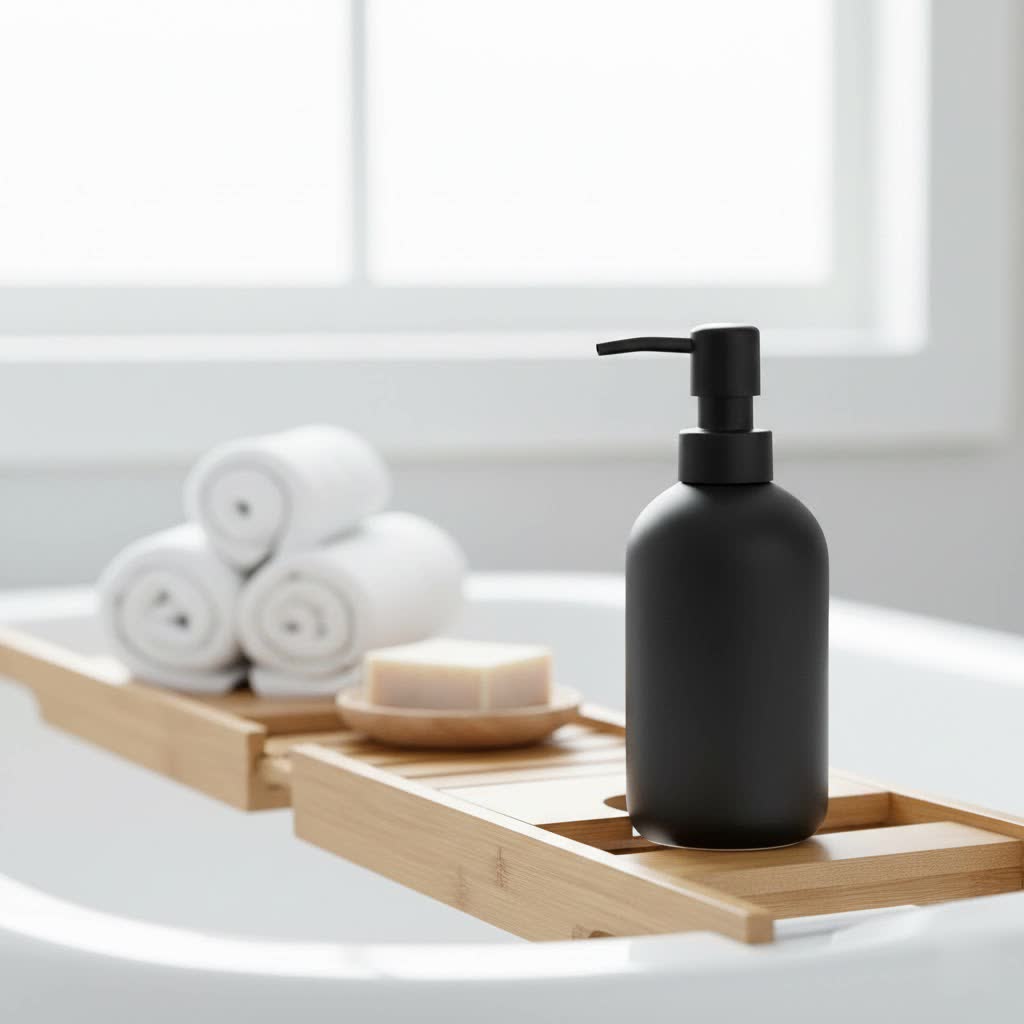
In a world increasingly focused on health and cleanliness, the humble act of handwashing has taken center stage. While traditional soap dispensers have long served their purpose, a revolutionary innovation has emerged to transform our daily routines: the Auto Hand Soap Dispenser. These touchless marvels not only enhance hygiene but also bring a touch of modern convenience and efficiency to any space. Whether you’re upgrading your home, optimizing a bustling kitchen, or ensuring peak sanitation in a commercial setting, understanding the nuances of automatic soap dispensers is key to making the best choice for your needs. This comprehensive guide will explore everything from their fascinating history and diverse types to how to select, use, and maintain them for lasting performance.
The Auto Hand Soap Dispenser: An Overview and Its Evolving History
The automatic hand soap dispenser represents a significant leap forward in personal hygiene, offering a hands-free solution that minimizes germ transmission and elevates the handwashing experience. Its role in daily life, from kitchens and bathrooms to public facilities, is becoming increasingly essential.
The journey of the soap dispenser itself dates back to the early 1800s, when manual pump dispensers first appeared in hospitals and public washrooms as a more sanitary alternative to shared bar soap. The patenting of liquid soap in 1865 paved the way for more efficient dispensing. However, it wasn’t until 1980 that Minnetonka Corporation popularized liquid soap pumps for home use, making them widely accessible. The true game-changer arrived in 1989 when Guey-Chuan Shiau from Taiwan invented the automatic soap dispenser, specifically aiming to improve hygiene in public toilets. This pioneering invention utilized motion sensor technology, marking the beginning of the touchless hygiene era. Since then, auto hand soap dispensers have evolved considerably, incorporating more advanced sensors, diverse designs, and enhanced features, solidifying their position as a modern hygiene staple.
Today’s automatic soap dispensers predominantly fall into a few key categories based on their operation and installation. While the focus remains on their automatic, touchless nature, they can be broadly classified by their physical setup: countertop (free-standing), wall-mounted, and deck-mounted (installed directly into a sink or counter). They are universally recognized for their ability to deliver soap without physical contact, drastically reducing cross-contamination in both residential and high-traffic commercial environments.
Popular Types of Soap Dispensers on the Market
While this article centers on the innovations of auto hand soap dispensers, it’s beneficial to understand the broader landscape of soap dispensing technology. Each type offers distinct advantages and applications, catering to various needs and aesthetic preferences.
Manual Soap Dispensers: Advantages, Disadvantages, and Applications
Manual soap dispensers are the traditional choice, requiring physical interaction—a press of a button or a push of a lever—to dispense soap.
- Advantages:
- Cost-effective: Generally more affordable to purchase and operate as they require no batteries or electricity.
- Simple design: Easy to understand and use, with minimal moving parts.
- Durable: Often constructed with robust mechanisms that can withstand frequent use.
- User control: Allows individuals to control the amount of soap dispensed with each pump.
- Disadvantages:
- Cross-contamination risk: Requires touching a shared surface, which can harbor and spread germs and bacteria, especially in high-traffic areas.
- Messy: Prone to drips and residue buildup around the nozzle and pump.
- Less modern aesthetic: May not align with contemporary design preferences for sleek, minimalist spaces.
- Applications: Ideal for budget-conscious households, low-traffic areas, or environments where power sources are limited. They are commonly found in older public restrooms, small offices, and some residential kitchens and bathrooms.
|
Our Picks for the Best Soap Dispenser in 2026
We may earn a commission when you use one of our links to make a purchase.
|
||
| Num | Product | Action |
|---|---|---|
| 1 | OXO Good Grips Soap Dispenser - 10 oz |

|
| 2 | JASAI 18Oz Green Glass Soap Dispenser with Gold Rust Proof Pump, Refillable Kitchen soap Dispenser for Dish Soap, Soap Dispenser Bathroom for Hand soap, Lotion, Body Wash. |
|
| 3 | Aunmaon Automatic Soap Dispenser Touchless, Hands-Free, Multi Adjustable Volume, Long Battery Life, Compatible with Thick & Thin Dish/Hand Soap for Bathroom and Kitchen, Easy for Toddlers, Black |
|
| 4 | Clear Soap Dispenser with Rust Proof Pump, Waterproof Labels (2 Pack,16 Oz), Plastic Hand Soap Dish Soap Dispenser for Kitchen Bathroom |
|
| 5 | OXO Good Grips Stainless Steel Soap Dispenser, Kitchen and Bathroom Accessories |
|
| 6 | simplehuman 8 oz. Touch-Free Sensor Liquid Soap Pump Dispenser with Soap Sample, Brushed Nickel |
|
| 7 | Automatic Soap Dispenser, Touchless Dish Soap Dispenser 17oz/500ml with Infrared Sensor, 5 Adjustable Soap Levels, Liquid Dispenser for Bathroom Kitchen (Silver) |
|
| 8 | JASAI 2PACK 18 Oz Glass Soap Dispenser with Rust Proof Stainless Steel Pump, Refillable Hand Soap Dispenser with Vertical Stripe, Premium Bathroom soap Dispenser for Kitchen & Bathroom |
|
| 9 | AIKE 15fl.oz Liquid Soap Dispenser for Dish and Hand Soap Matte Black |
|
| 10 | Small Soap Dispenser for Bathroom and Kitchen, Modern Farmhouse Striped Style Plastic Hand Soap Dish Soap Dispenser with Pump Matte Black |
|
Automatic Soap Dispensers: Advantages, Disadvantages, and Applications
Automatic (or touchless) soap dispensers utilize sensor technology to dispense soap without any physical contact, offering a superior hygienic experience.
- Advantages:
- Enhanced hygiene: Eliminates the need to touch surfaces, significantly reducing the spread of germs and cross-contamination.
- Convenience: Dispenses soap instantly with a wave of the hand, making handwashing quicker and more efficient.
- Cost-efficiency & waste reduction: Delivers a pre-measured amount of soap, preventing overuse and waste.
- Modern aesthetic: Adds a sleek, high-tech, and sophisticated look to any bathroom or kitchen.
- Improved compliance: The novelty and ease of use encourage better handwashing habits, particularly among children and in public settings.
- Disadvantages:
- Higher initial cost: Generally more expensive than manual dispensers.
- Power source dependent: Requires batteries (which need periodic replacement) or a direct power connection.
- Potential for accidental activation: Highly sensitive sensors can sometimes dispense soap unintentionally if hands or objects pass too close.
- Maintenance for sensors: Sensors can become obstructed by soap residue or dust, requiring occasional cleaning.
- Applications: Highly recommended for any environment where hygiene is a top priority. This includes homes (kitchens, bathrooms), public restrooms, healthcare facilities, restaurants, schools, offices, and commercial spaces. They are perfect for high-traffic areas where minimizing germ spread is crucial.
Wall-Mounted Soap Dispensers: Advantages, Disadvantages, and Applications
Wall-mounted dispensers, whether manual or automatic, are affixed directly to a wall, keeping countertops clear.
- Advantages:
- Space-saving: Frees up valuable counter space, especially in smaller bathrooms or kitchens.
- Clutter-free aesthetic: Contributes to a cleaner, more organized look.
- Fixed position: Stays securely in place, preventing accidental knocking over.
- Easy cleaning around: Facilitates easier cleaning of the sink and countertop area beneath.
- Disadvantages:
- Installation effort: Requires drilling and proper mounting, which can be more involved than simply placing a dispenser on a counter.
- Permanent fixture: Less flexible for rearrangement once installed.
- Refilling can be challenging: Depending on the design, refilling may require more effort than a countertop model.
- Applications: Excellent for public restrooms, commercial kitchens, showers, and any space where maximizing counter space and maintaining a minimalist aesthetic are important. They are often chosen for durability and to prevent theft in commercial settings.
Countertop Soap Dispensers: Advantages, Disadvantages, and Applications
Countertop dispensers are freestanding units placed directly on a sink or vanity, offering flexibility and ease of setup.
- Advantages:
- Easy installation: No drilling or permanent fixture required; simply place it where needed.
- Portability: Can be easily moved or rearranged as desired.
- Wide variety of designs: Available in countless styles, materials, and finishes to match any decor.
- Simple refilling: Most designs offer straightforward refilling by simply lifting the top.
- Disadvantages:
- Occupies counter space: Takes up valuable real estate, which can be a concern in smaller areas.
- Potential for tipping: Can be accidentally knocked over, leading to spills or breakage.
- More susceptible to residue: May accumulate water spots and soap residue on the surrounding countertop.
- Applications: Popular for residential bathrooms and kitchens due to their convenience and design versatility. Also suitable for low-traffic commercial areas where aesthetics and easy placement are priorities.
Detailed Comparison of Various Soap Dispenser Types
When deciding on the perfect soap dispenser, a direct comparison across key criteria can highlight the strengths and weaknesses of each type, helping you align your choice with your specific needs. The table below focuses on the primary categories, with particular attention to how auto hand soap dispensers stand out.
| Feature | Manual Pump Dispenser | Automatic (Touchless) Dispenser | Wall-Mounted Dispenser (Manual/Auto) | Countertop Dispenser (Manual/Auto) |
|---|---|---|---|---|
| Hygiene | Requires touch; high risk of cross-contamination | Touch-free; significantly reduces germ spread | Varies by operation (manual or auto) | Varies by operation (manual or auto) |
| Convenience | Push/pump action | Effortless, instant dispensing | Easy access | Highly accessible |
| Cost (Initial) | Low | Moderate to High | Varies, plus installation costs | Varies |
| Cost (Running) | Very Low (no batteries) | Low (battery/recharge needs) | Varies by operation | Varies by operation |
| Durability | Generally high, simple mechanism | Good, but electronics can fail | Often robust due to fixed position | Good, but can be knocked over |
| Maintenance | Regular cleaning of pump & bottle | Battery checks, sensor cleaning, general cleaning | Regular cleaning, pump/sensor checks | Regular cleaning, pump/sensor checks |
| Aesthetics | Traditional, basic designs | Sleek, modern, high-tech | Clean, minimalist, space-saving | Diverse styles, flexible placement |
| Space | Countertop only | Countertop or wall-mounted | Maximizes counter space | Occupies counter space |
| Soap Usage | User-controlled (can lead to waste) | Controlled, precise dispensing (reduces waste) | Controlled (if auto), user-controlled (if manual) | Controlled (if auto), user-controlled (if manual) |
| Ideal For | Budget-conscious, low-traffic areas | Hygiene-critical, modern spaces, high-traffic | Commercial, small spaces, minimalist | Residential, flexible arrangement |
How to Choose the Right Auto Hand Soap Dispenser
Selecting the perfect automatic hand soap dispenser involves more than just picking a stylish model. It requires a thoughtful assessment of your specific environment, usage patterns, and personal preferences to ensure functionality, durability, and a seamless fit with your lifestyle or business operations.
Determine Your Usage Needs
Begin by evaluating where and how the dispenser will be used.
- Number of Users: For a single-person household, a smaller capacity dispenser might suffice. For a large family, busy office, or public restroom, a larger capacity unit will reduce refilling frequency.
- Installation Location:
- Kitchen: Consider a unit that can handle both hand soap and dish soap (if multipurpose), and one that complements kitchen appliances.
- Bathroom: Focus on design, ease of cleaning, and compatibility with bathroom decor.
- Public/Commercial: Prioritize durability, large capacity, tamper-resistance, and hygienic features.
- Frequency of Use: High-traffic areas demand robust dispensers with reliable sensors and long battery life or direct power options. Less frequent use might allow for more design-centric choices.
Select the Right Material
The material of your auto hand soap dispenser impacts its durability, aesthetic, and ease of maintenance.
- Plastic (ABS):
- Pros: Lightweight, affordable, resistant to corrosion, available in many colors and finishes. Easy to clean.
- Cons: May look less premium, some plastics can yellow over time, less durable against impact compared to metal.
- Stainless Steel:
- Pros: Modern, sleek, highly durable, corrosion-resistant, hygienic, premium feel. Matches contemporary decor.
- Cons: Can show fingerprints and water spots, generally more expensive.
- Ceramic/Glass:
- Pros: Elegant, decorative, heavy (stable on countertops), offers a classic or artisanal look.
- Cons: Fragile (prone to breaking if dropped), generally heavier, limited to countertop placement.
Consider Style and Design
The aesthetic of your auto hand soap dispenser should complement its surroundings. Modern spaces might benefit from minimalist, sleek designs in stainless steel or matte black. Traditional or rustic settings might pair well with ceramic or bronze finishes. Look for features like:
- Slim profiles: To save counter space.
- Transparent reservoirs: To easily monitor soap levels.
- Color and finish: To match existing fixtures and decor.
- Ergonomics: Easy to use for all ages and abilities.
Research Brands and Suppliers
Choosing a reputable brand and supplier is crucial for product quality, reliability, and customer support. Look for companies with:
- Positive reviews: Indicating user satisfaction and product performance.
- Good warranty policies: Offering peace of mind.
- Specialization in hygiene products: Suggesting expertise and quality.
- Innovation: Brands that continually improve sensor technology, battery life, and design.
Read Reviews and Compare Prices
Before making a final decision, always:
- Consult user reviews: Real-world experiences often highlight practical pros and cons not found in product descriptions. Pay attention to comments on sensor responsiveness, battery life, and durability.
- Compare features and prices: Don’t just go for the cheapest option. Evaluate the value proposition by comparing features like soap volume adjustment, foaming vs. liquid dispense, capacity, and power source against the price. An investment in a slightly more expensive, high-quality dispenser can save money and frustration in the long run.
Top Auto Hand Soap Dispensers for Modern Spaces
The market offers a wide array of excellent auto hand soap dispensers, each with unique features catering to different preferences and needs. Here are some of the most highly-regarded models that frequently appear on “best of” lists, known for their performance, design, and user satisfaction.
- Simplehuman Touch-Free Sensor Pump: Often cited as an industry leader, Simplehuman dispensers are praised for their sleek, high-end design and advanced functionality. Key features include a precise sensor that dispenses varying amounts of soap based on hand position, a non-drip spout, and a rechargeable battery that can last for months. They typically offer robust build quality, making them a premium choice for those prioritizing aesthetics and reliability.
- Secura Automatic Soap Dispenser: This brand is a popular choice for its large capacity options and versatility. Secura models often feature adjustable soap volume controls, allowing users to customize the dispensed amount. Many are designed for both countertop and wall-mounted use, providing flexibility. The transparent soap container is a practical feature, making it easy to monitor soap levels.
- Umbra Otto Automatic Soap Dispenser: For those who prioritize design, the Umbra Otto stands out with its modern, compact aesthetic available in various finishes. It integrates seamlessly into contemporary decor. While it might have simpler volume controls compared to other advanced models, its appealing design and reliable sensor operation make it a favorite for stylish homes and offices.
- XiaoRong Automatic Soap Dispenser (Budget-Friendly): For shoppers seeking excellent performance without a high price tag, XiaoRong offers a compelling option. These dispensers typically feature accurate infrared sensors and adjustable volume controls across multiple levels. They are known for their durable construction and decent capacity, proving that effective touchless hygiene can be accessible to all budgets.
- Hanamichi Soap Dispenser: Hanamichi models are often noted for their smart infrared motion sensors, designed to prevent accidental dispensing by requiring closer proximity. They typically accommodate various liquid soaps and offer intuitive soap volume control. These dispensers are appreciated for their thoughtful engineering that balances responsiveness with practical usage.
When considering any of these, always check the specific model’s features, capacity, power source (battery type or rechargeable), and user reviews to ensure it perfectly aligns with your expectations.
How to Use and Maintain Your Auto Hand Soap Dispenser Correctly
Maximizing the lifespan and performance of your auto hand soap dispenser requires not just proper usage but also diligent maintenance. A little care goes a long way in ensuring its consistent functionality and hygienic benefits.
Safe and Effective Usage
Using your automatic soap dispenser is generally straightforward, but a few tips can enhance your experience:
- Position your hand correctly: Place your hand directly under the sensor and spout. Most dispensers have an optimal range (usually a few inches) for activation.
- Adjust soap volume (if applicable): If your model has adjustable settings, experiment to find the ideal amount of soap for your needs to avoid waste.
- Avoid overfilling the reservoir: While it might seem convenient, overfilling can lead to leaks or interfere with the sensor’s operation. Always leave a small air gap at the top.
- Use appropriate soap: Most automatic dispensers work best with liquid hand soap or foaming soap specifically designed for them. Thick lotions or granular soaps can clog the mechanism. If using regular liquid soap in a foaming dispenser, dilute it with water (check manufacturer instructions).
Tips for Cleaning and Maintaining Your Auto Hand Soap Dispenser
Regular cleaning and maintenance are critical to prevent clogs, sensor malfunctions, and bacterial buildup.
- Clean the exterior regularly: Wipe down the outside of the dispenser with a soft, damp cloth and mild soap (avoid abrasive cleaners or harsh chemicals) to remove fingerprints, water spots, and soap residue.
- Focus on the sensor area: The infrared sensor can become obscured by dried soap or dust. Gently clean this area with a soft, lint-free cloth, possibly dampened with a bit of rubbing alcohol, to ensure optimal responsiveness.
- Flush the pump mechanism: If you notice reduced soap flow or clogs, empty the dispenser, fill the reservoir with warm water, and cycle the dispenser several times until the water runs clear. This can dislodge soap buildup within the pump and nozzle.
- Clean the soap reservoir: Periodically, especially when refilling, thoroughly clean the internal reservoir with warm water and a brush to prevent bacterial growth or soap residue accumulation. Ensure it’s completely dry before refilling with fresh soap.
- Check and replace batteries: For battery-operated units, regularly check the battery life. Replace depleted batteries promptly to ensure consistent operation. Some models have low-battery indicators. Always use the recommended battery type.
- Avoid direct water exposure: While many dispensers are water-resistant, submerging them or exposing the battery compartment to excessive water can cause damage.
- Store properly if not in use: If you’re storing the dispenser for an extended period, empty and clean it thoroughly to prevent soap from drying and clogging the pump.
By following these simple steps, your auto hand soap dispenser will remain a reliable, hygienic, and convenient addition to your space for years to come.
Conclusion
The auto hand soap dispenser has undeniably revolutionized our approach to personal hygiene, transforming a simple act into a touchless, efficient, and sanitary experience. From its humble beginnings to today’s sophisticated designs, these devices offer unparalleled benefits in reducing germ spread, promoting effective handwashing, and enhancing the aesthetic appeal of any environment. By understanding the diverse types available, making an informed choice based on your specific needs, and committing to proper maintenance, you unlock the full potential of smart hygiene. Embrace the convenience and peace of mind that an automatic hand soap dispenser brings. Isn’t it time to upgrade your handwashing routine and contribute to a healthier, cleaner future for everyone?
Câu Hỏi Thường Gặp
How do automatic soap dispensers work?
Automatic soap dispensers utilize an infrared or motion sensor to detect your hand. Once a hand is detected within its range, the sensor sends a signal to a small motor, which activates a pump mechanism to dispense a pre-measured amount of liquid or foam soap without any physical contact. This process ensures a hygienic and efficient handwashing experience.
Are automatic soap dispensers more hygienic than manual ones?
Yes, automatic soap dispensers are significantly more hygienic than manual dispensers. By eliminating the need to touch any surface, they drastically reduce the risk of cross-contamination and the spread of germs and bacteria that can accumulate on manual pump heads, particularly in high-traffic areas.
Can I use any type of liquid soap in an automatic dispenser?
It depends on the dispenser. Most automatic dispensers are designed for liquid hand soap, dish soap, or foaming soap. However, very thick soaps, abrasive soaps with颗粒s, or those not specified by the manufacturer can clog the internal pump mechanism. For foaming dispensers, you often need to use foaming soap or dilute regular liquid soap. Always check the manufacturer’s recommendations.
How often do I need to clean my automatic soap dispenser?
For optimal hygiene and performance, it’s recommended to clean the exterior and especially the sensor area of your automatic soap dispenser at least once a month. A deeper clean of the internal reservoir and flushing the pump mechanism with warm water should be done periodically, especially during soap refills, to prevent clogs and buildup.
What should I do if my automatic soap dispenser stops working?
First, check the batteries if it’s a battery-operated model, as depleted batteries are a common cause. Next, clean the sensor area thoroughly to ensure no soap residue or dirt is obstructing it. Also, verify the soap level and ensure the type of soap used is compatible. Some models may also have a reset function you can try. If these steps don’t work, consult the user manual or contact customer support.